


Blog
Which Cookware Is Best for Health? A Complete Guide for Pakistani Kitchens

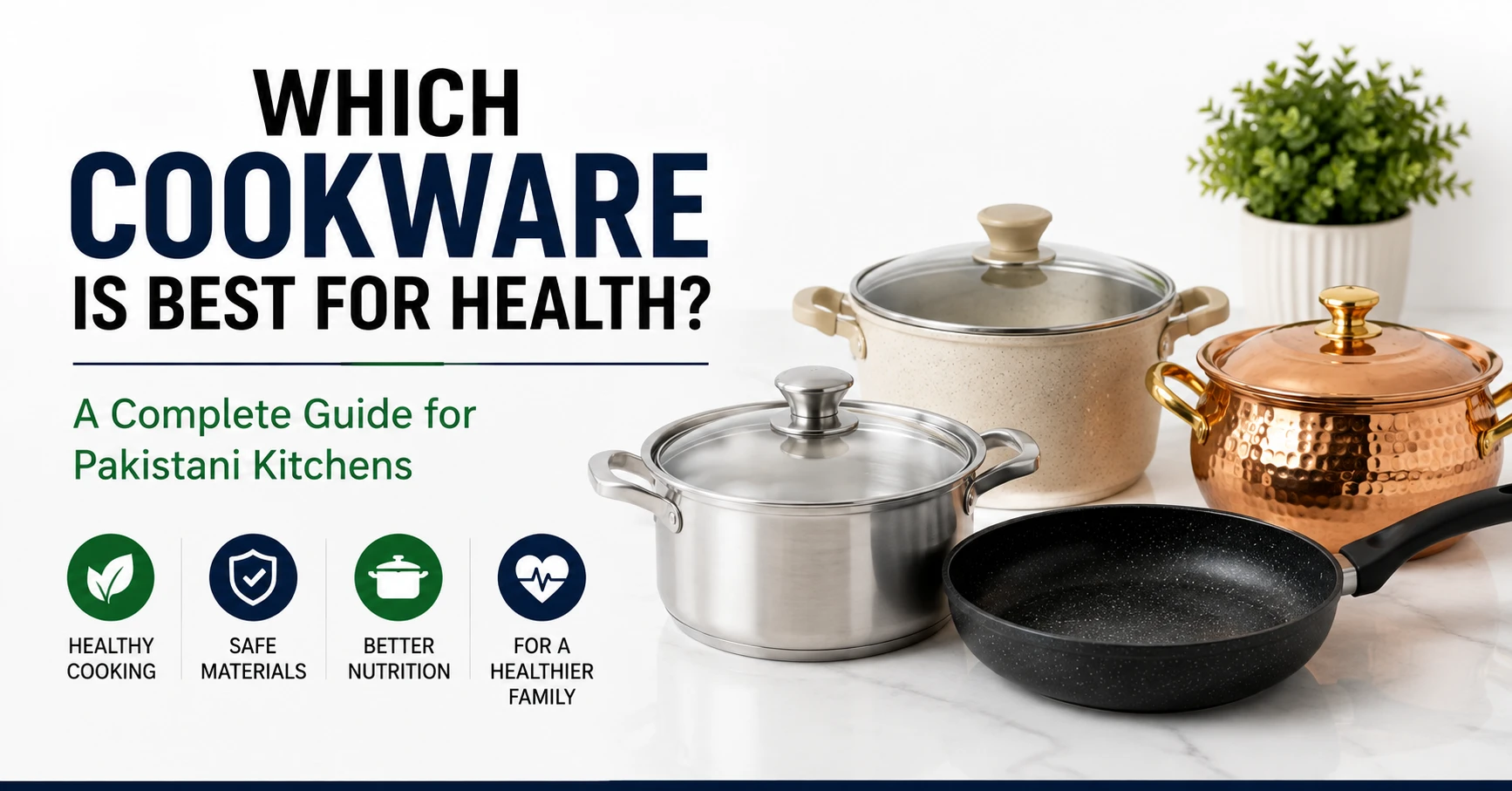
When buying cookware, most people first think about price, size and appearance. But there is another question that deserves attention: is the cookware suitable for the way we actually cook?
In Pakistani kitchens, one pan may be used for frying onions in the morning, cooking daal at lunch and preparing a curry for dinner. Different dishes also require different temperatures, cooking times and amounts of oil.
That is why there is no single cookware material that can honestly be called the healthiest choice for everyone.
Stainless steel, anodized and non-stick cookware can all have a useful place in a kitchen when they are appropriate for the food being prepared and cared for correctly.
Casio Cookwares currently offers a range that includes non-stick, anodized, metal-finish, die-cast, pressure-cooker and induction-base cookware, giving Pakistani households several options for different cooking needs.
The better question, therefore, is:
Which cookware is best for my cooking habits?
What Should You Look for in Healthy Cookware?
Before choosing a new pan or cooking pot, consider four basic things.
1. The cooking surface
The surface that comes into contact with food is an important consideration. Stainless-steel cookware, for example, does not depend on a non-stick coating for its cooking surface.
Casio’s Stock Pot Set describes its interior as 304-grade stainless steel, with an aluminium core between stainless-steel layers.
2. Your oil requirements
Some cookware surfaces make it easier to cook food with less oil.
Casio describes its Anodized range and certain non-stick products as suitable for low-oil cooking.
The important distinction is that cookware does not make a meal healthy by itself. The ingredients, quantity of oil, cooking method and overall diet still matter.
3. Heat distribution
Uneven heating can make cooking frustrating. Food may burn in one place while remaining undercooked somewhere else.
The construction of a pan can make a difference here. Casio’s Stock Pot Set uses an aluminium core between stainless-steel layers, which the company describes as providing even heat distribution.
4. Care and condition
Even good cookware needs proper care.
A non-stick pan, for example, should not be treated like a heavy stainless-steel pot. Following the manufacturer’s care instructions can help maintain the cooking surface for longer.
Stainless Steel Cookware: A Dependable Everyday Choice
For many Pakistani households, stainless steel is a practical option because it can handle a wide range of everyday cooking.
It can be useful for:
- Daal
- Rice
- Salan
- Soups
- Boiling
- Stews
- Meat dishes
- Cooking larger quantities
Casio’s Stock Pot Set (Rim Edge) combines stainless steel with an aluminium core. Its product page states that the interior is made from 304-grade stainless steel and the exterior uses 430-grade steel. The company also states that the exterior is magnetic, allowing the cookware to be used on induction cooktops as well as gas stoves.
Explore the Casio Stock Pot Set
Why stainless steel can be useful
Stainless steel does not rely on a non-stick coating for its cooking surface. It can also be a good choice when you regularly prepare foods that require simmering or longer cooking.
There is a small learning curve, though. Food can stick if the pan is too cold, too hot or not used with an appropriate amount of cooking fat.
So stainless steel is not necessarily about “never sticking.” It is about having a durable cooking surface that suits many everyday jobs.
Anodized Cookware: A Practical Option for Everyday Meals
Anodized cookware is another option for people who want cookware designed for regular cooking.
Casio’s current product range includes anodized cookware such as saucepans, casseroles, woks and frypans.
The Casio Anodized Frypan is presented by the company as a choice for low-oil cooking.
Explore Casio Anodized Cookware
Where can you use an anodized pan?
Depending on the individual product, an anodized pan can be useful for:
- Eggs
- Vegetables
- Chicken
- Stir-frying
- Light frying
- Everyday meals
The key is to check the specifications and care instructions for the particular product rather than assuming every anodized pan has exactly the same properties.
Non-Stick Cookware: Convenient for Low-Oil Cooking
There is a reason non-stick cookware is so common in modern kitchens: it makes certain foods considerably easier to cook.
Eggs, pancakes, fish, vegetables and other foods that tend to stick can be easier to manage on a suitable non-stick surface.
Casio currently has a dedicated Non-Stick Cookware category with products including cookware sets and individual pieces.
Explore Casio Non-Stick Cookware
Can non-stick cookware be part of a healthy kitchen?
Yes, it can be useful if you want to reduce the amount of oil required for particular dishes.
However, proper use matters.
Take care of the coating
Casio’s Induction Casserole, for example, features an ultra non-stick coating. The manufacturer recommends hand washing it in warm, soapy water and specifically advises against using steel wool on the non-stick surface.
For coated cookware in general, it is sensible to:
- Avoid unnecessary overheating.
- Use suitable utensils.
- Avoid abrasive cleaning materials.
- Follow the manufacturer’s care instructions.
- Replace cookware when the cooking surface is seriously damaged.
These simple habits can help you get more useful life from your cookware.
Pressure Cookers: Useful for Traditional Pakistani Cooking
A pressure cooker is particularly useful in kitchens where daal, chickpeas, beans and meat are regular parts of the menu.
The benefit is simple: pressure cooking can make foods that normally take a long time to cook much quicker.
Casio has a dedicated pressure-cooker range. Its current website lists models including Togo, Mega, Family, French, Novelta and Moca Wok pressure cookers.
Explore Casio Pressure Cookers
For example, the Casio Togo Pressure Cooker is available in 3L, 5L, 7L, 9L and 11L sizes.
Which size should you choose?
That depends on your household.
A smaller cooker can be practical for a couple or small family, while larger capacities make more sense when you regularly prepare food for several people.
The important thing is to choose the capacity according to your normal cooking requirements rather than simply buying the biggest option.
Induction Base Cookware: A Modern Kitchen Option
If your kitchen uses an induction cooktop, cookware compatibility becomes especially important.
Induction compatibility does not automatically mean that cookware is healthier. It simply means that the cookware is designed to work with an induction cooking surface.
Casio has a dedicated induction-base range, including products such as its Induction Casserole.
View Casio Induction Base Cookware
The Casio Induction Casserole is listed with a 3mm thickness, an ultra non-stick coating and compatibility with induction and several other cooking surfaces. The product is available in 22cm, 24cm, 26cm and 28cm sizes.
The manufacturer also recommends washing it by hand with warm, soapy water and avoiding steel wool.
Which Cookware Is Best for Pakistani Food?
The answer changes according to what is on the menu.
For Daal and Salan
A stainless-steel pot or suitable casserole can be a practical choice.
Stainless steel is particularly useful when you need a cooking vessel for simmering and preparing gravies.
For Eggs and Low-Oil Frying
A suitable non-stick or anodized frypan can make the job easier.
These surfaces can help reduce sticking and may allow you to use less oil for certain recipes.
For Biryani and Large Portions
A larger stock pot or casserole is more convenient.
Casio’s Stock Pot Set is offered in multiple sizes, giving households the option to choose according to the amount of food they normally prepare.
For Chana, Daal and Meat
A pressure cooker is a useful addition to the kitchen.
Casio’s pressure-cooker range includes several models and capacities.
For Tawa Cooking
A suitable tawa or metal-finish cookware can be useful for everyday flatbread and other pan-cooked foods. Casio’s current range includes a Tawa Metal Finish product.
How to Use Cookware Properly
Buying the right cookware is only part of the equation. How you use it matters just as much.
Avoid unnecessary overheating
Particularly with coated cookware, avoid leaving an empty pan over high heat for an unnecessarily long period.
Use the heat level appropriate for the food you are cooking.
Choose suitable utensils
For coated cookware, cookware-friendly utensils are a sensible choice because they can reduce unnecessary scratching of the cooking surface.
Clean according to the manufacturer’s instructions
Casio recommends hand washing its Induction Casserole with warm, soapy water and advises against steel wool.
Its Stock Pot Set also recommends allowing hot stainless-steel cookware to cool before cleaning and avoiding harsh scrubbing materials.
Look at the condition of your cookware
If a coated cooking surface has become badly damaged, continuing to use it may not be worthwhile. Replacing heavily worn cookware is a better approach than trying to extend its life indefinitely.
How to Choose the Right Cookware for Your Kitchen
Before purchasing another pot or pan, ask yourself these questions.
What do I cook most often?
If your family eats plenty of daal, curry and rice, prioritize pots and casseroles.
If breakfast usually means eggs and parathas, a good frypan or tawa may be more useful.
How much oil do I normally use?
If you are deliberately reducing the amount of oil in certain meals, a suitable non-stick or anodized pan may make that easier.
What stove do I have?
For induction cooking, always check that the specific cookware is listed as induction-compatible.
How many people do I cook for?
A small household does not necessarily need very large cookware. Choosing practical sizes can save both cupboard space and money.
How much maintenance do I want?
Stainless steel, anodized and coated cookware all have different care requirements. Choose something you are comfortable maintaining.
A Practical Cookware Set-Up for a Pakistani Kitchen
You do not need every type of cookware available.
A practical kitchen can start with a few well-chosen pieces:
One stainless-steel pot
For daal, rice, curries and boiling.
One non-stick frypan
For eggs, vegetables and low-oil cooking.
One anodized pan or saucepan
For everyday smaller meals.
One pressure cooker
For lentils, chickpeas, meat and other foods that benefit from pressure cooking.
One tawa or suitable pan
For roti, paratha and other flatbread cooking.
From there, you can add larger pots, casseroles or cookware sets according to your family’s cooking habits.
Final Thoughts
So, which cookware is best for health?
There is no universal winner.
Stainless steel is a dependable option for many everyday dishes. Anodized cookware can be useful for regular cooking and low-oil preparation. Non-stick cookware is convenient when you want food to release easily and reduce the oil needed for certain dishes. And a pressure cooker can be extremely useful for preparing foods such as daal, beans and meat efficiently.
The healthier choice is not simply about choosing one material and calling it the best. It is about selecting cookware that suits the food you prepare, using appropriate heat and oil, and taking care of the cooking surface properly.
Casio Cookwares currently offers a broad selection covering non-stick, anodized, metal-finish, die-cast, pressure-cooker and induction-base cookware, so Pakistani households can choose according to their individual cooking needs.
Good cookware should fit your kitchen — not the other way around.
Explore the Casio Cookwares Range
Frequently Asked Questions
1. Which cookware is best for healthy cooking?
There is no single cookware material that is best for everyone. Stainless steel, anodized and non-stick cookware can all be useful depending on the dish, cooking method and how the cookware is maintained.
2. Is stainless steel good for Pakistani cooking?
Yes. Stainless steel cookware is suitable for many everyday dishes, including daal, rice, curries and soups. Casio’s Stock Pot Set uses stainless-steel layers with an aluminium core.
3. Is non-stick cookware suitable for low-oil cooking?
A suitable non-stick surface can make it easier to prepare some foods with less oil because food is less likely to stick. Casio’s current range includes multiple non-stick products.
4. Is anodized cookware good for everyday use?
Anodized cookware can be a practical choice for everyday cooking. Casio currently offers anodized saucepans, casseroles, woks and frypans.
5. Can Casio cookware be used on an induction stove?
Some Casio cookware is specifically designed for induction cooking. For example, the Casio Induction Casserole is listed as compatible with induction as well as several other cooking surfaces.
6. How should I clean Casio non-stick cookware?
Casio recommends hand washing its Induction Casserole in warm, soapy water and advises against using steel wool on the non-stick surface.
7. Which cookware is suitable for cooking with less oil?
Suitable non-stick and anodized cookware can make low-oil cooking easier for certain dishes. The amount of oil used should still depend on the recipe and your personal dietary requirements.
8. Which pressure cooker sizes are available in the Casio Togo range?
The current Togo Pressure Cooker page lists 3L, 5L, 7L, 9L and 11L sizes.
About Casio Cookwares
Casio Cookwares’ website presents the company as a Pakistani cookware brand offering a range of cookware solutions, including non-stick, anodized, metal-finish and pressure-cooker products. Its current website also includes induction-base and die-cast categories.
For current product specifications, sizes, availability and prices, check the individual product page before purchasing because these details can change.
Casio Cookwares — choose cookware according to the way you cook.


