
Blog
How to Choose the Right Non-Stick Frying Pan Size

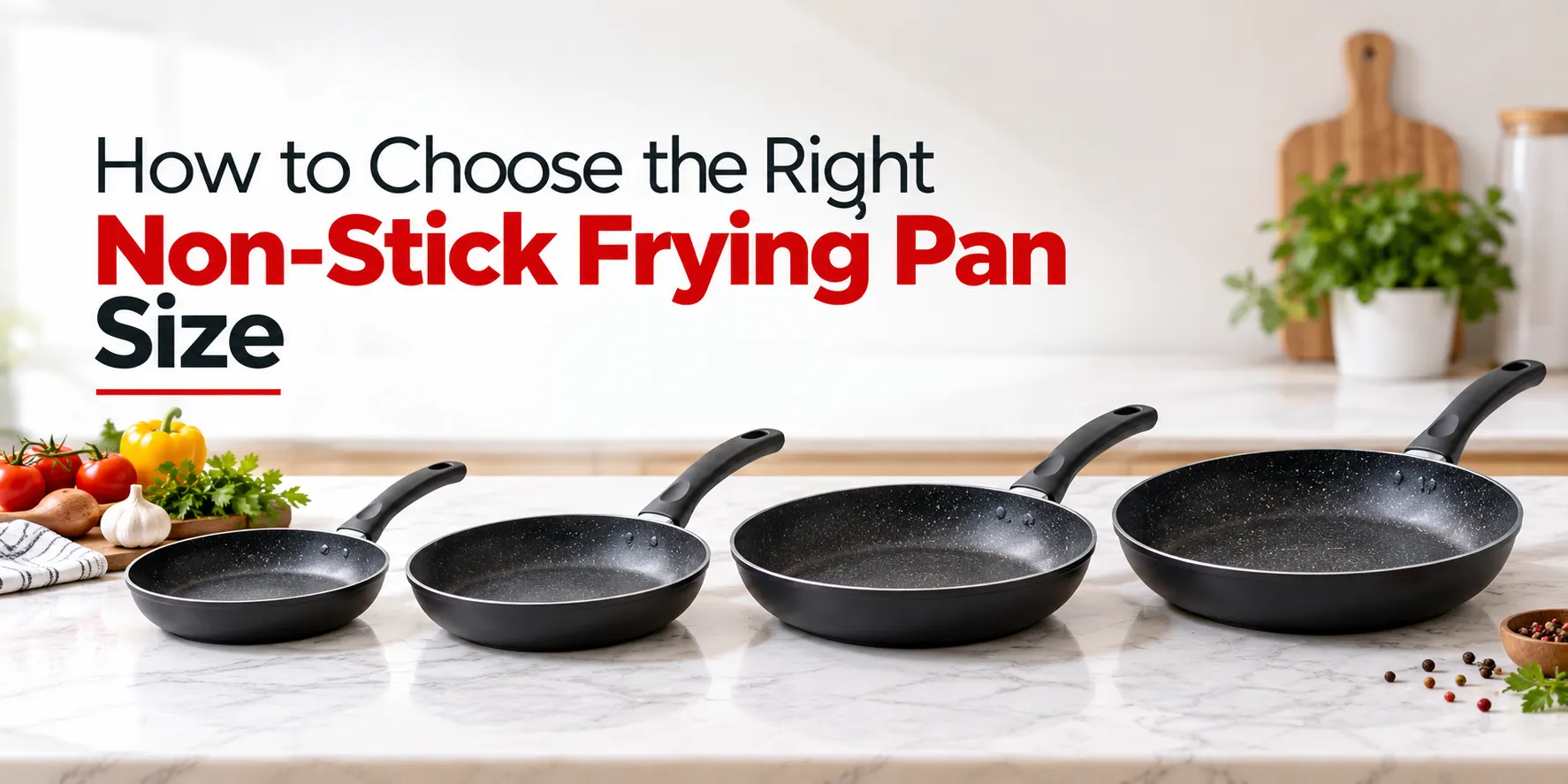
A non-stick frying pan is one of the most frequently used pieces of cookware in a Pakistani kitchen. From frying eggs in the morning to preparing kebabs, sautéing vegetables or cooking quick family meals, the right pan can make everyday cooking much easier.
But what size non-stick frying pan should you buy?
An 18cm pan may be convenient for small portions, while a 28cm frying pan gives you considerably more cooking surface. Choosing the biggest option isn’t always the best solution, though. Your family size, recipes, burner size and normal portion requirements should all influence the decision.
This guide explains how to choose the right non-stick frying pan size for the way you actually cook.
You can also browse the Casio Non-Stick Cookware collection to compare available frying pans and other cookware.
Frying Pan Size Is About Cooking Surface, Not Just Family Size
Frying pans are commonly listed according to their diameter in centimetres.
Casio’s non-stick range includes frying pan options across sizes such as 18cm, 20cm, 22cm, 24cm, 26cm and 28cm.
As the diameter increases, you generally get more surface area for arranging ingredients. That can be useful when food needs enough room to cook without overcrowding the pan.
However, don’t use a rule such as:
“Two people = this size” or “five people = that size.”
Two families of four may cook completely differently. One may use a frying pan mainly for eggs, while another may regularly prepare larger quantities of kebabs, chicken or vegetables.
Start with what you cook and how much you cook at once.
18cm Frying Pan: Compact Cooking
An 18cm non-stick frying pan sits at the compact end of the size range.
It can be useful when you regularly prepare small portions and don’t need a large cooking surface.
You might consider this size for:
- a single egg or smaller breakfast portions;
- small quantities of ingredients;
- quick individual meals;
- kitchens where storage is limited;
- keeping a small secondary pan alongside a larger one.
Its compact size can be convenient, but it may feel restrictive if you frequently prepare food for several people.
20cm Frying Pan: Small but More Flexible
A 20cm frying pan gives you slightly more room while remaining relatively compact.
It may suit people who generally cook smaller portions but want more flexibility than an 18cm pan provides.
This size can make sense for individuals, couples or as an additional everyday pan in a kitchen that already has larger cookware.
The important question is whether your usual ingredients can sit comfortably in the pan without unnecessary crowding.
22cm and 24cm: The Middle Ground
Moving into 22cm and 24cm frying pans gives you a more generous cooking surface.
These sizes can be worth considering when your cooking needs are too large for compact pans but you don’t regularly require the space of a 26cm or 28cm model.
A medium-sized frying pan may work well for:
- everyday breakfast preparation;
- sautéing vegetables;
- preparing moderate portions;
- shallow frying suitable foods;
- general household cooking.
For many buyers, this middle range is worth comparing carefully because it offers versatility without automatically choosing the largest pan available.
26cm Frying Pan: More Room for Family Cooking
A 26cm non-stick frying pan provides additional surface area for larger portions.
This can be useful when you often cook several pieces of food at once or prepare meals for multiple people.
A wider cooking surface can also help reduce overcrowding compared with trying to fit the same quantity into a smaller pan.
However, check your stove before purchasing. A large pan should be appropriately matched to your cooking setup according to the cookware and appliance manufacturer’s guidance.
28cm Frying Pan: When You Need a Larger Surface
A 28cm frying pan is the largest of these Casio size options.
Its main attraction is cooking space.
If your household regularly prepares larger quantities, a 28cm pan may reduce the need to cook suitable foods in several smaller batches.
Consider 28cm if:
- larger portions are normal in your kitchen;
- you frequently cook for several people;
- you want more room between ingredients;
- your stove and storage space can accommodate a larger pan.
Don’t choose it simply because it is the biggest option. If you normally prepare one or two small portions, a smaller pan may be more convenient.
Non-Stick Frying Pan Size Comparison
| Pan Size | Consider It When… |
| 18cm | You mostly prepare very small portions |
| 20cm | You want a compact pan with slightly more room |
| 22cm | You need a small-to-medium everyday option |
| 24cm | You want a versatile medium cooking surface |
| 26cm | You frequently prepare larger portions |
| 28cm | You regularly need a broad cooking surface |
Treat this as a selection guide rather than a strict family-size chart. Your recipes and portions remain more important than the number of people in your household.
Match the Pan to Your Favourite Foods
Still confused? Look at your weekly menu.
Eggs and Breakfast
If the pan is mainly for one or two eggs and other small breakfast portions, you may not need a very large diameter.
Kebabs and Similar Foods
When several pieces need to be arranged in the pan at once, additional surface area can be useful.
Vegetables
If you frequently sauté larger quantities of vegetables, a medium or larger pan may provide more practical working space.
Everyday Family Meals
If your frying pan serves several different purposes throughout the day, consider a versatile medium-to-large size rather than buying solely for one recipe.
This dish-first approach is often more useful than choosing according to family size alone.
Check Your Stove and Storage Space
A frying pan doesn’t exist in isolation. It has to fit your kitchen.
Before ordering a larger size, consider your:
Cooktop: Does the pan size work appropriately with your cooking setup?
Other burners: Will a large pan interfere with cookware being used beside it?
Cabinets: Do you have enough space to store it?
Sink: Will cleaning a larger pan be convenient?
Handle clearance: Does your normal cooking area provide enough room?
These practical details are easy to overlook when viewing cookware online.
Don’t Confuse Pan Size With Induction Compatibility
A 24cm or 28cm pan isn’t automatically suitable for induction simply because of its size—or because it has a non-stick surface.
Non-stick and induction-compatible describe different characteristics.
If you cook on induction, check the specifications of the exact product before purchasing.
Our guide How to Tell If Your Cookware Is Induction Compatible explains this in more detail. You can also explore Casio’s dedicated Induction Series for relevant options.
Size Isn’t the Only Feature Worth Checking
Once you have narrowed down the diameter, compare the individual frying pans themselves.
Look at:
- product construction;
- non-stick coating information;
- handle design;
- stated dimensions;
- cooktop compatibility;
- care instructions; and
- current price.
If you’re deciding between individual pans and a complete set, our Non-Stick Cookware Buying Guide for Pakistani Kitchens provides a broader overview of building a practical cookware collection.
How to Protect Your Non-Stick Frying Pan
Choosing the correct size won’t matter much if the cooking surface is damaged through improper use.
Follow the care instructions supplied with your cookware. Use utensils and cleaning methods suitable for the particular non-stick surface, and avoid abrasive treatment that may damage the coating.
You can learn more in our guides:
How to Use Non-Stick Cookware Properly and Make It Last Longer
How to Clean Non-Stick Pans Without Damaging the Coating
These articles should be internally linked once their final URLs are live.
FAQs
What is the best frying pan size for everyday cooking?
There isn’t one best size for everyone. A medium-sized pan can be versatile, but the correct choice depends on your usual recipes, portions, stove and available storage.
Is a 28cm frying pan too big?
Not if you regularly prepare larger portions and your cooking setup accommodates it. For consistently small meals, however, a smaller pan may be more convenient.
Is a 20cm frying pan good for one or two people?
It can be useful for smaller portions, but household size isn’t the only factor. Consider the foods and quantities you normally prepare.
Should I buy one large frying pan or two different sizes?
If your cooking varies significantly, having a smaller and larger frying pan can be more flexible than expecting one pan to handle every task.
Does frying pan size affect induction compatibility?
No. Diameter alone doesn’t determine induction compatibility. Check the construction and specifications of the exact pan and follow your cooktop manufacturer’s guidance.
Find Your Everyday Frying Pan at Casio Cookwares
The right frying pan isn’t automatically the biggest one on the shelf.
Choose according to your portions, favourite recipes, available cooking surface and kitchen space. A compact 18cm or 20cm pan may be perfect for smaller tasks, while 24cm, 26cm or 28cm options provide additional room when your cooking demands it.
Ready to compare your options?


