


Blog
Aluminium vs Stainless Steel Cookware: Which Is Better for Daily Cooking?

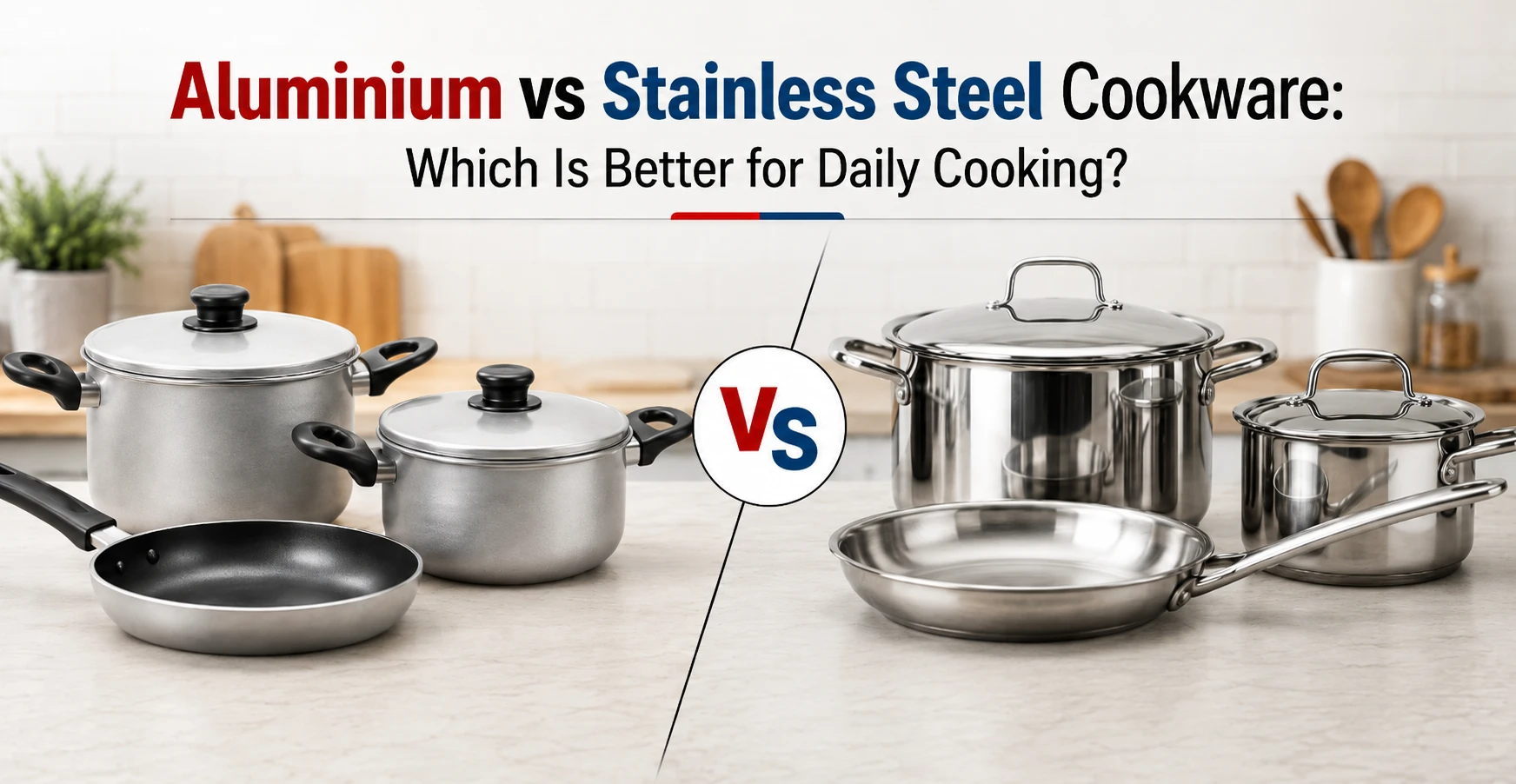
Choosing cookware for everyday use is not simply about appearance or price. The material of a pot or pan affects how quickly it heats, how it handles different foods, how much care it needs, and how long it can remain useful in the kitchen.
Two materials that often come up when comparing cookware are aluminium and stainless steel. Both have their advantages, but they behave differently on the stove.
So, which one is better for daily cooking?
The answer depends on what you cook, how often you cook, the type of stove you use, and how much convenience or durability you expect from your cookware.
Aluminium Cookware: What Makes It Popular?
Aluminium is widely used in cookware because it is lightweight and conducts heat efficiently. Health Canada’s guidance also identifies lightweight construction and good heat conductivity as two of the practical reasons aluminium cookware is popular.
For everyday cooking, good heat conductivity can be useful because the pan responds relatively quickly when the heat is changed. This makes aluminium suitable for many routine cooking tasks, from boiling and preparing rice to making curries and other family meals.
Casio Cookwares uses high-quality aluminium across several of its cookware ranges. The company states that its high-end cookware products use 99.9% pure aluminium, while its product range includes metal-finish and anodised cookware.
One example is the Casio Stock Pot Cooking Set, which is made from high-quality aluminium and designed for soups, stews, pasta, rice and other larger meals. The product description specifically highlights its heat conductivity and even cooking performance.
Advantages of Aluminium
- Lightweight and easy to handle
- Heats efficiently
- Suitable for regular cooking
- Available in a wide variety of shapes and sizes
- Often more affordable than heavier premium cookware
- Particularly useful when quick heat response is important
However, not every aluminium pan is identical. Surface treatment, thickness, construction and the quality of the cookware can make a significant difference to its performance.
Stainless Steel Cookware: What Makes It Different?
Stainless steel is valued primarily for its strength, durability and resistance to corrosion. Unlike aluminium, stainless steel by itself is not an especially efficient heat conductor.
This is why many stainless steel cookware products use a layered or bonded construction, often incorporating a more conductive metal such as aluminium into the base or core. This construction can combine the durability of stainless steel with improved heat distribution.
Stainless steel is also useful when cooking methods involve browning, searing or higher temperatures. It can withstand regular kitchen use without relying on a non-stick coating for its basic cooking surface.
Advantages of Stainless Steel
- Strong and durable
- Resistant to corrosion
- Suitable for frequent use
- Generally easy to maintain
- Useful for browning and searing
- Does not depend on a non-stick coating for food preparation
Its main drawback is that basic stainless steel does not distribute heat as efficiently as aluminium. Proper preheating and cooking technique can therefore be more important.
Aluminium vs Stainless Steel: Key Differences
| Feature | Aluminium | Stainless Steel |
| Weight | Generally lightweight | Generally heavier |
| Heat conductivity | High | Lower than aluminium |
| Heat response | Quick | Slower |
| Durability | Depends on thickness and finish | Generally very durable |
| Corrosion resistance | Depends on surface and treatment | Generally high |
| Acidic foods | More care may be required with uncoated aluminium | Generally more suitable |
| High-heat cooking | Depends on construction and finish | Well suited |
| Ease of handling | Usually easier | Can feel heavier |
| Maintenance | Depends on finish | Generally straightforward |
| Best strength | Fast, efficient everyday cooking | Durability and versatile cooking techniques |
There is no universal winner. Each material solves a different set of kitchen problems.
Which Material Heats Faster?
For straightforward heat transfer, aluminium has the advantage.
Its high thermal conductivity allows heat to move through the cookware efficiently. This is one reason aluminium is commonly used in cookware designed for quick and even heating. Health Canada’s cookware guidance also specifically describes aluminium as a good heat conductor.
Stainless steel, on the other hand, conducts heat less efficiently. A well-designed stainless steel pan can compensate by using an aluminium or copper core or bonded base.
This distinction matters in daily cooking. If you frequently prepare meals where quick heating and temperature response are useful, aluminium can be a practical choice.
Which Is Better for Everyday Pakistani Cooking?
There is no single answer because Pakistani cooking covers a wide range of techniques.
Rice, daal, vegetables, curries, gravies, soups and large family meals can all place different demands on cookware.
For example, aluminium cookware can be useful when you want a lightweight pot that heats efficiently. Casio’s aluminium rice pans and stock pots are specifically designed for rice, curries, soups, stews and family-sized meals.
For cooking that involves strong browning or high-heat techniques, stainless steel can be a better fit, particularly when the cookware has a well-designed heat-distribution base.
The important point is that the best material depends on the cooking task rather than simply the name of the material.
What About Acidic and Salty Foods?
This is one area where the difference between cookware materials deserves attention.
Health Canada advises that acidic or salty foods can increase the transfer of substances from aluminium cookware, particularly when the cookware is worn or pitted. It recommends avoiding highly acidic or salty foods in aluminium cookware and avoiding long cooking or storage periods in it.
This does not mean that all aluminium cookware is unsuitable for everyday cooking. Surface treatment and cookware design matter.
For example, anodised aluminium has a hardened surface that is more resistant to wear and corrosion than ordinary untreated aluminium. Health Canada notes that anodised aluminium retains aluminium’s good heat conductivity while providing a harder, more durable surface.
Casio also offers an Anodised Series. Its Anodized Casserole is described as being made from anodized aluminium with improved durability and corrosion resistance for everyday cooking.
A Practical Rule
If you regularly cook highly acidic foods such as tomato-heavy dishes, citrus-based preparations or other acidic recipes, pay close attention to the cookware’s surface and the manufacturer’s care instructions.
Do not use visibly damaged, badly scratched or pitted cookware for food preparation.
Which Cookware Is Easier to Maintain?
Maintenance depends more on the cookware’s finish and construction than on the material name alone.
Basic aluminium cookware can scratch or become damaged if handled roughly. Health Canada recommends washing aluminium cookware by hand with mild detergent and a soft cloth or sponge and using non-metal utensils to help prevent surface damage.
Stainless steel is generally forgiving during everyday use, but it can develop discoloration, stains or stuck-on food if it is overheated or used without proper technique.
For either material, good habits make a difference:
- Follow the manufacturer’s cleaning instructions.
- Avoid damaging the cooking surface.
- Do not use badly damaged cookware.
- Use the correct utensils for the surface.
- Allow cookware to cool appropriately before cleaning when recommended.
- Avoid storing food in cookware for unnecessarily long periods.
Is Anodised Aluminium Different?
Yes.
Anodising changes the surface of aluminium, creating a harder and more corrosion-resistant layer. It does not turn aluminium into stainless steel; instead, it improves the surface properties of the aluminium cookware.
This can make anodised cookware an appealing middle ground for people who like aluminium’s heat performance but want a more durable cooking surface.
Casio’s Anodised Series is designed around this type of construction. Its Anodized Casserole is described as using premium anodized aluminium and is positioned for everyday cooking, including rice, soups, curries and vegetables.
Which One Lasts Longer?
Stainless steel generally has an advantage when comparing durability alone, particularly when the cookware is well constructed and properly maintained.
However, saying that every stainless steel pan will outlast every aluminium pan would be misleading.
The thickness of the cookware, manufacturing quality, surface treatment, handles, base construction and cooking habits all affect service life.
A well-made, properly maintained aluminium pan can remain useful for years. An anodised aluminium product can offer additional surface durability compared with untreated aluminium.
Casio’s product range reflects this difference by offering several aluminium-based constructions rather than relying on a single cookware material. Its ranges include Metal Finish, Anodised, Die-Cast, Induction and Non-Stick cookware.
Aluminium or Stainless Steel: Which Should You Choose?
Think about your kitchen routine before making the decision.
Choose Aluminium If:
- You prefer lightweight cookware.
- You want efficient heat transfer.
- You regularly prepare rice, vegetables, curries or large family meals.
- You want cookware that is easy to lift and handle.
- Quick heat response is important to you.
Consider Stainless Steel If:
- Long-term durability is your main priority.
- You frequently sear or brown food.
- You prefer a rigid, sturdy cooking surface.
- You want cookware that does not rely on a non-stick coating.
- You are comfortable using proper preheating and cooking techniques.
A Note About Cookware Safety
Material alone does not determine whether cookware is safe.
The manufacturing quality, food-contact surface, condition of the cookware and intended use all matter. Health authorities have also warned about certain imported cookware products that were found to leach lead, demonstrating why consumers should choose cookware from reliable manufacturers and avoid products of uncertain composition.
That warning should not be interpreted as meaning that aluminium cookware as a category is unsafe. The FDA’s food-contact framework covers substances used in cookware and evaluates safety based on their intended conditions of use.
For consumers, the practical approach is simple: buy from a reputable manufacturer, follow the care instructions, and replace cookware that has become significantly damaged.
Frequently Asked Questions
Is aluminium better than stainless steel for everyday cooking?
Not necessarily. Aluminium heats efficiently and is lightweight, while stainless steel is stronger and highly durable. The better option depends on the foods you prepare and the cooking techniques you use.
Which heats faster, aluminium or stainless steel?
Aluminium generally heats more quickly because it has much higher thermal conductivity. Stainless steel cookware may compensate through layered or bonded construction.
Is aluminium cookware good for Pakistani cooking?
Yes. Aluminium cookware can be practical for many Pakistani meals, including rice, curries, vegetables, soups and large family meals. Casio offers several aluminium cookware products designed for these types of everyday uses.
Is stainless steel safer than aluminium?
It is not accurate to declare one material universally safer. Safety depends on the cookware’s composition, manufacturing quality, condition and intended use. Damaged cookware and products of uncertain composition should be avoided.
Can I cook acidic food in aluminium cookware?
Extra care is recommended with untreated aluminium. Health Canada advises against using aluminium cookware for highly acidic or salty foods because these conditions can increase transfer from the cookware.
What is anodised aluminium cookware?
Anodised aluminium has a specially treated surface that is harder and more resistant to corrosion and wear than ordinary aluminium. It retains aluminium’s good heat conductivity while providing a more durable surface.
Which is easier to clean?
Neither material automatically wins. Cleaning depends on the cookware’s surface and how it is used. Following the manufacturer’s cleaning instructions and avoiding excessive scratching can help extend the life of either type.
Can one cookware set meet every cooking need?
It can cover many everyday tasks, but different cookware constructions are suited to different jobs. A kitchen may benefit from combining lightweight aluminium or anodised cookware with other specialised pieces depending on cooking habits.
Final Verdict
So, aluminium vs stainless steel cookware: which is better for daily cooking?
For cooks who value light weight, efficient heating and quick everyday cooking, aluminium is a strong practical choice.
For those who prioritise durability, strength and cooking techniques such as browning and searing, stainless steel can be the better fit.
And if you like aluminium’s heat performance but want a harder, more durable surface, anodised aluminium is worth considering.
The smartest choice is not necessarily the cookware with the most impressive material name. It is the one that matches your cooking routine, stove, maintenance habits and the meals you prepare most often.
Choose Cookware That Fits Your Kitchen
Casio Cookwares offers several cookware constructions, including Metal Finish, Anodised, Die-Cast, Induction and Non-Stick Series, allowing shoppers to choose according to their cooking requirements rather than relying on one material for every task.
Explore the Casio Cookwares collection to compare cookware styles and find options suited to your everyday kitchen needs.


